Optical Backplanes Replace Copper Inside Liquid-Cooled Inference Racks
Hyperscale cluster operators are swapping twinax copper trays for co-packaged silicon photonics as rack power envelopes cross 130 kilowatts.
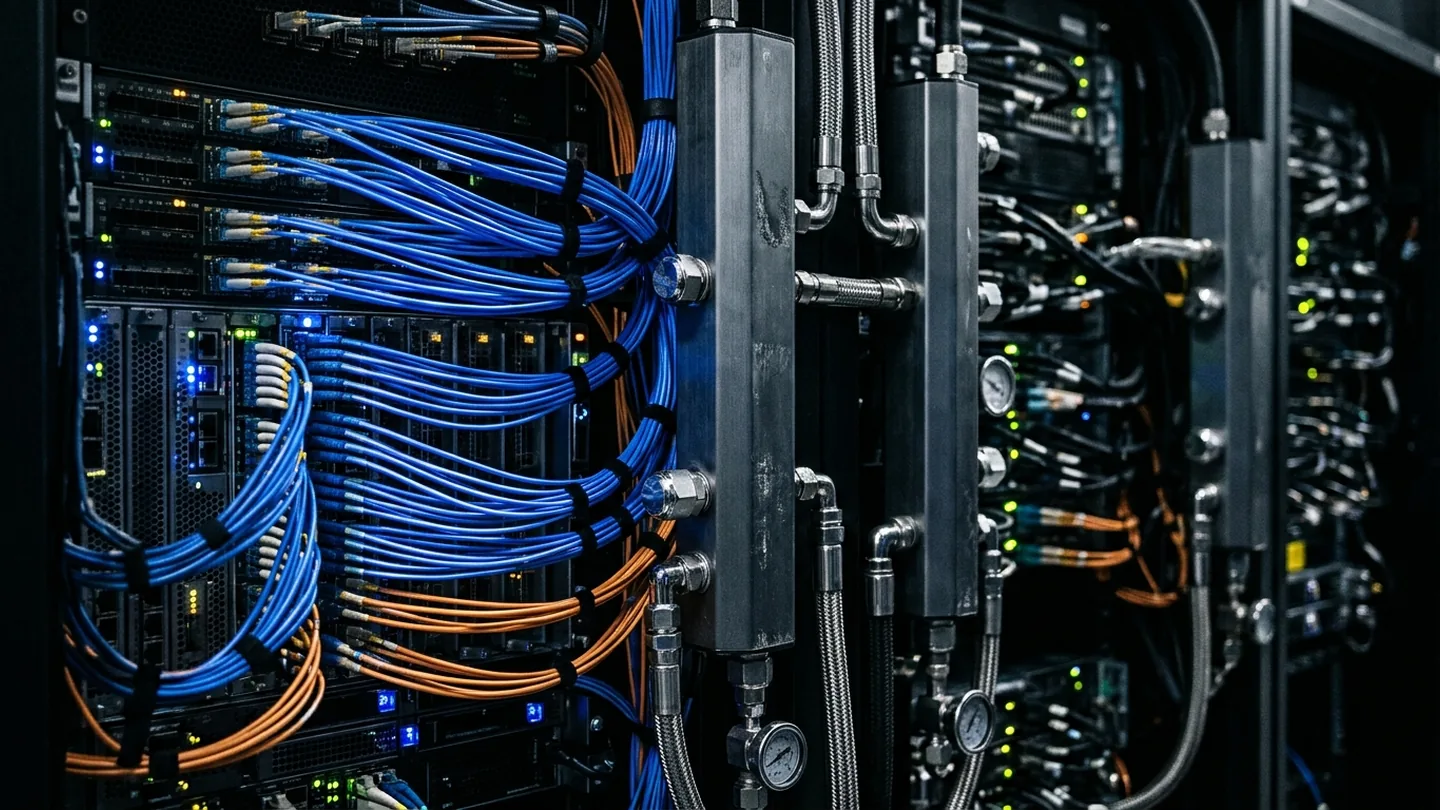
Passive copper cables carried the first generation of dense accelerator racks because they cost a fraction of optical transceivers and added almost no latency. That physical bargain breaks down once a single cabinet draws more than 125 kilowatts and links 72 or more processors across adjacent trays. At 224 gigabits per second per lane, twinax copper reaches barely two meters before signal attenuation forces power-hungry retimers onto every board.
Why Rack Geometry Forced the Optical Shift
Hardware procurement teams in Frankfurt, Northern Virginia, and Osaka told Kestrel Wire that cable bulk now obstructs rear-door manifold maintenance on direct-liquid-cooled cabinets. Replacing 1,100 thick copper assemblies with ribbon fiber trunks frees 38 percent of rear plenum airflow and trims interconnect power by roughly 9.4 watts per terabit.
Field trials completed in October show mean time between link flaps improving once laser sources move off hot pluggable cages and into external rack-mounted light boxes—a modular compromise that avoids soldering fragile lasers directly onto $30,000 compute packages. That serviceability matters for operators financing hardware through Infrastructure Debt Funds Step Into Regional Substation Upgrades structures with strict five-year uptime covenants.
Supply Bottlenecks in Packaging Foundries
Substrate capacity remains the pacing constraint. Specialty glass-core interposers and micro-lens arrays still carry 26-week lead times across Taiwanese and Japanese assembly houses. Meanwhile, enterprise buyers running narrower warehouse workloads are bypassing cluster-scale optics altogether through Quantized Domain Models Cut Warehouse Inference Spend by Forty Percent deployments that fit inside standard air-cooled closets.
Clara covers semiconductor packaging, rack-scale photonics, and enterprise inference economics. Prior to joining Kestrel Wire, she spent seven years reporting on European lithography supply chains and data center thermal engineering.
Reader Notes (2)
Moderated by desk editorsRear plenum clearance is underrated in almost every TCO spreadsheet. Cutting copper cable mass reduced our hot-swap technician service window from forty-five minutes to twelve minutes during October acceptance tests.
External pluggable laser modules are the decisive engineering detail here. Keeping InP lasers in a serviceable 1U cold plate slot avoids scrapping an entire compute sled when a single channel degrades after 18,000 hours.
Contribute a Technical Note
Your email address is used strictly for verification and is stripped before any note appears publicly.
A sharper daily ledger on technology, power, and capital.
One concise morning dispatch unpacking wafer packaging, private infrastructure debt, HVDC grid queues, and industrial software—zero press-release rewrites.
Keep Reading
More in Silicon & AI →
Quantized Domain Models Cut Warehouse Inference Spend by Forty Percent
Logistics and manufacturing IT teams are distilling frontier checkpoints into 8-billion-parameter task models that run locally on dual-card PCIe servers.
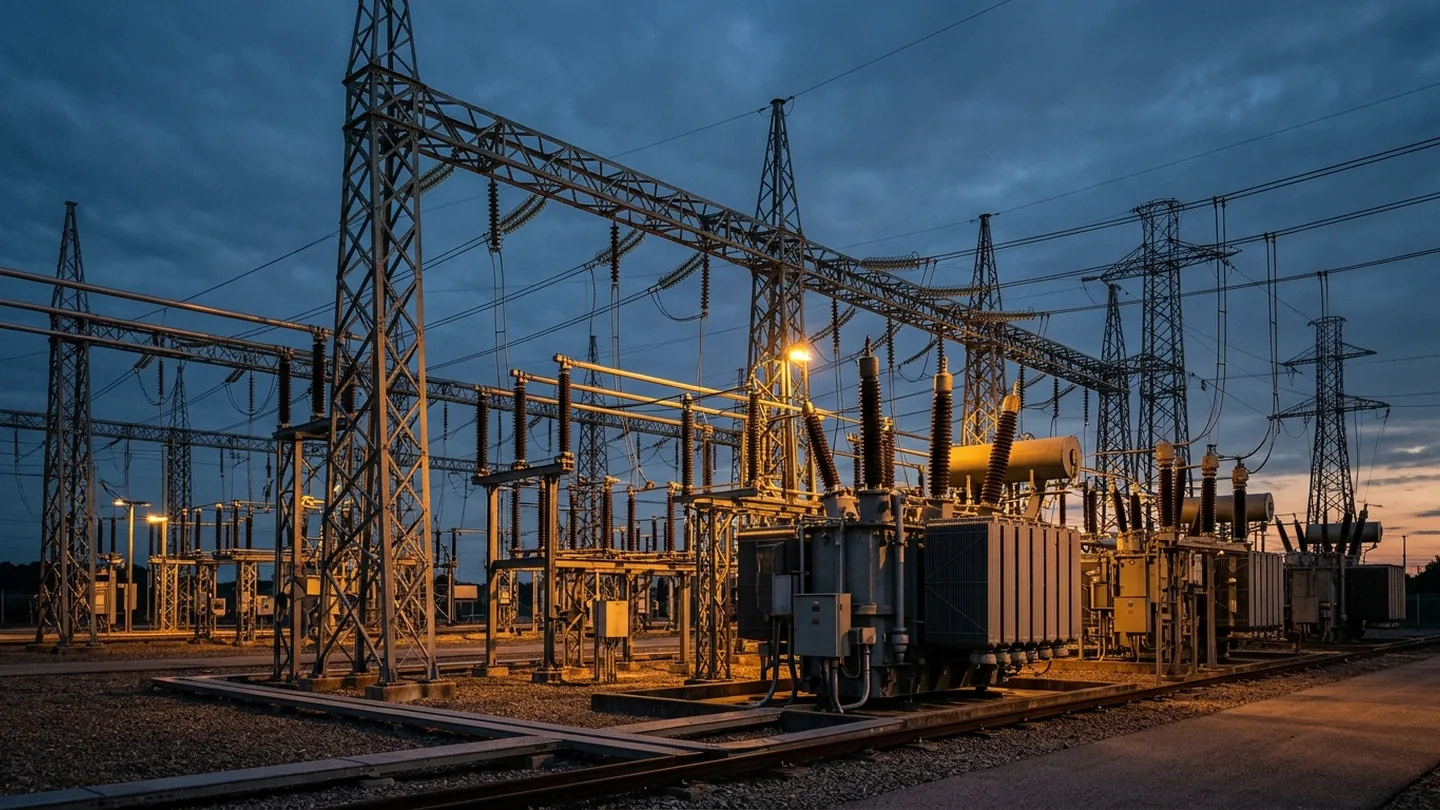
Infrastructure Debt Funds Step Into Regional Substation Upgrades
With utility rate-case approvals taking up to thirty months, private credit desks are structuring ring-fenced project notes for 345 kV transformer yards.
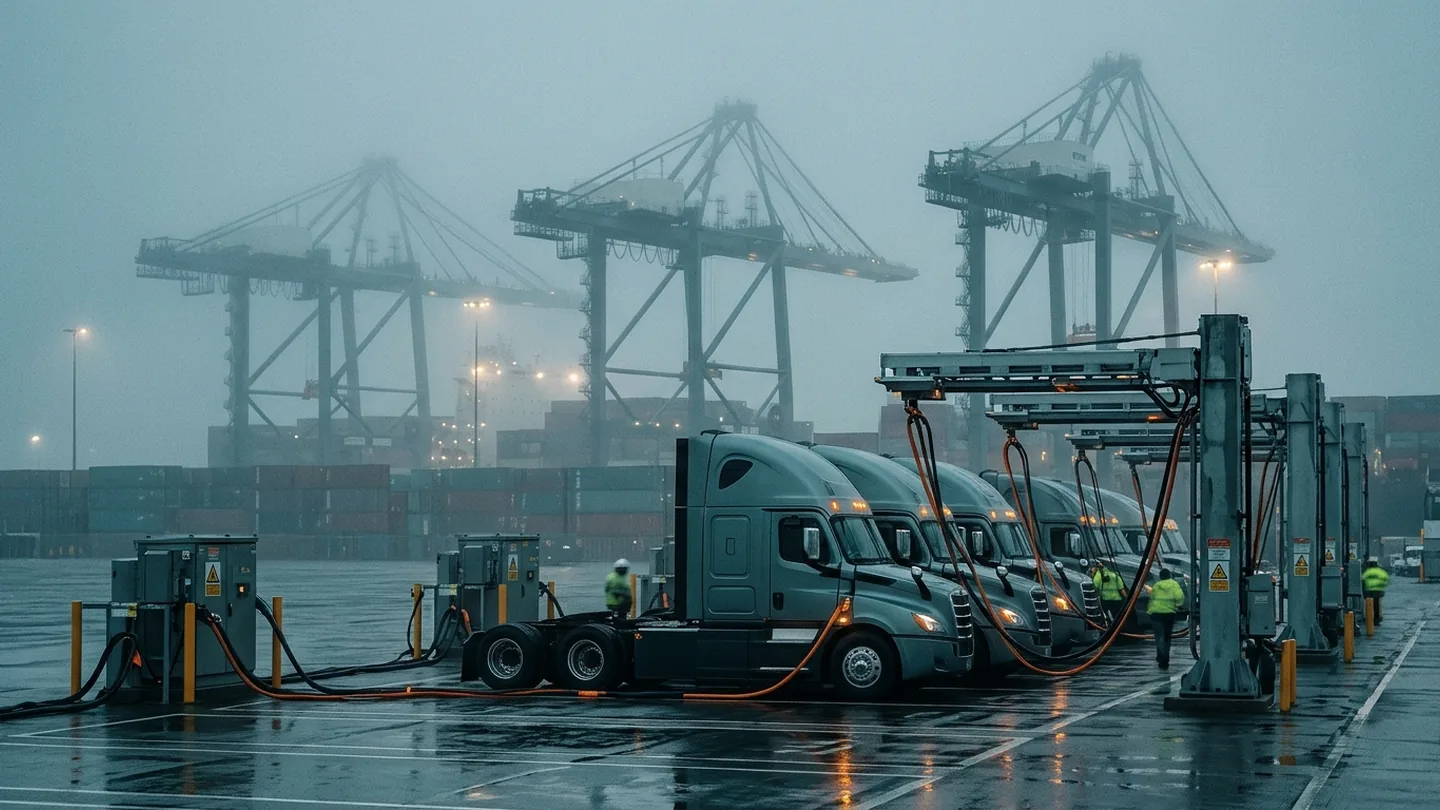
Sodium-Ion Battery Packs Enter Cold-Weather Port Drayage Fleets
Short-haul container tractors in Baltic and Great Lakes terminals are trading energy density for reliable sub-zero fast charging and zero cobalt exposure.