Buoy-Mounted Optical Spectrometers Map Industrial Estuary Runoff Every Ten Minutes
Reagent-free UV-vis sensor arrays are replacing weekly grab samples across chemical corridors, catching transient discharge spikes in real time.
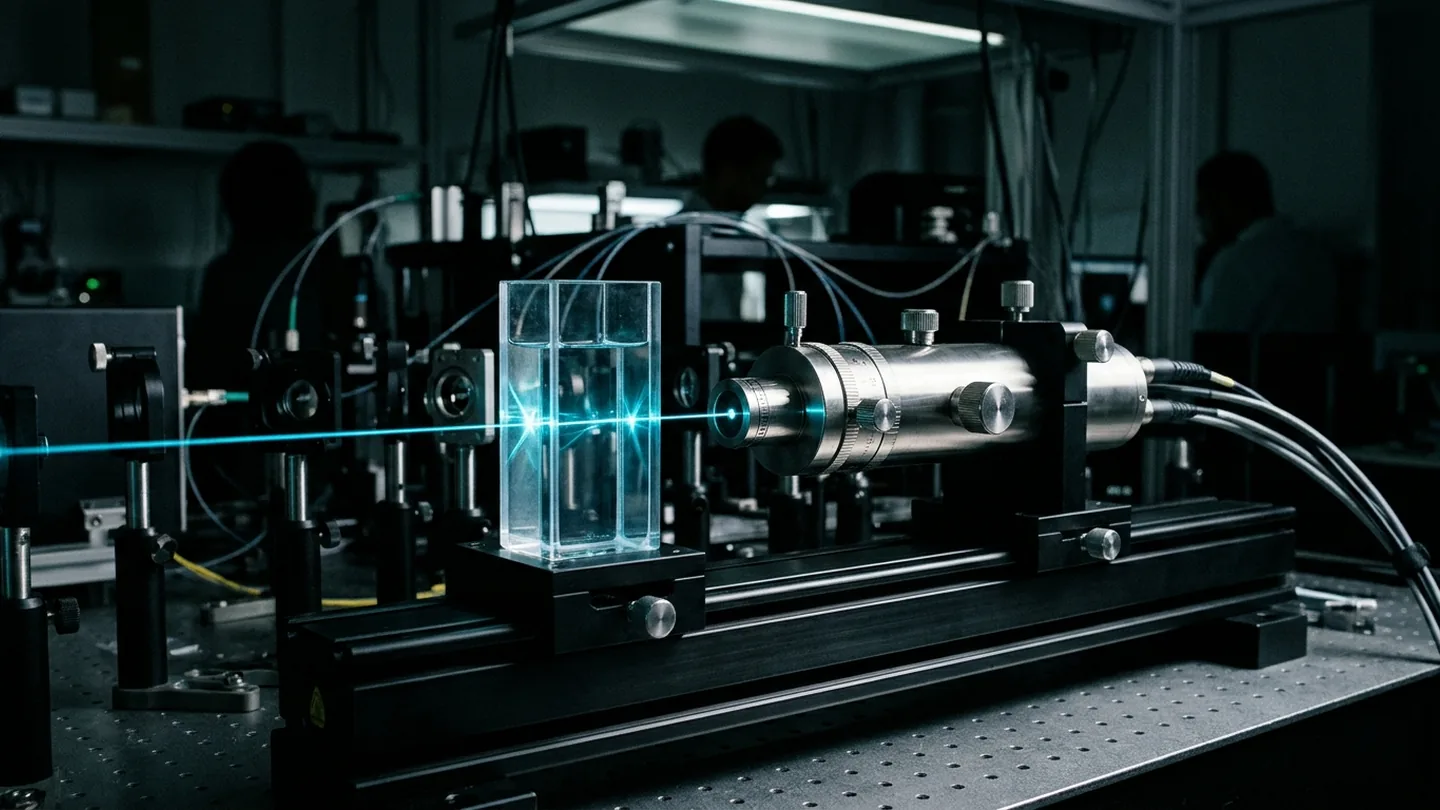
Municipal water authorities monitoring tidal industrial rivers have historically relied on technicians lowering sample bottles from bridges twice a month, then waiting four days for gas chromatography results. By the time a solvent or nitrate plume registers in the lab, tidal flushing has already carried the discharge forty kilometers downstream.
Wiper-Cleaned Quartz Optics Cut Biofouling Drift
A consortium of river commissions along the Rhine-Meuse delta and the Houston Ship Channel deployed 140 solar-powered optical buoys this autumn that scan 200 to 750 nanometer absorption spectra every ten minutes. Mechanical copper-alloy shutters wipe the sapphire optical window before each pulse, extending maintenance intervals from twelve days to fourteen weeks in brackish silt.
Deconvolution models running on low-power microcontrollers separate dissolved organic carbon, nitrates, and aromatic hydrocarbons within 4 percent of wet-lab reference runs. Chemical plants upstream are installing identical inline sensors beside Continuous-Flow Bioreactors Trim Solvent Waste in Specialty Polymers to verify effluent compliance before process water ever enters municipal treatment basins.
Shared Telemetry and Enforcement Thresholds
Regulators do not issue fines solely from optical readings; instead, an automated spike threshold triggers an onboard vacuum carousel that seals a physical water vial for chain-of-custody lab verification. Hardware costs have dropped from $28,000 to $9,200 per node thanks to compact spectrometer diodes originally commercialized for telecom test gear used in New Atlantic Subsea Landings Turn Coastal Towns Into Low-Latency Hubs.
Devon writes about analytical instrumentation, continuous chemical processing, and industrial water monitoring. Trained in chemical engineering, he focuses on pilot-to-commercial scale-up economics.
Reader Notes (0)
Moderated by desk editorsNo published reader notes on this dispatch yet. Contribute field context or technical feedback below.
Contribute a Technical Note
Your email address is used strictly for verification and is stripped before any note appears publicly.
A sharper daily ledger on technology, power, and capital.
One concise morning dispatch unpacking wafer packaging, private infrastructure debt, HVDC grid queues, and industrial software—zero press-release rewrites.
Keep Reading
More in Applied Lab →
Continuous-Flow Bioreactors Trim Solvent Waste in Specialty Polymers
Immobilized enzyme cartridges operating at forty-five degrees Celsius are replacing energy-intensive batch kettles for optical-grade monomers.

Optical Backplanes Replace Copper Inside Liquid-Cooled Inference Racks
Hyperscale cluster operators are swapping twinax copper trays for co-packaged silicon photonics as rack power envelopes cross 130 kilowatts.
Infrastructure Debt Funds Step Into Regional Substation Upgrades
With utility rate-case approvals taking up to thirty months, private credit desks are structuring ring-fenced project notes for 345 kV transformer yards.